
A delegation from the Bamboo Forest Productivity Enhancement and Symbiotic Economy Study Group paid a visit to JibaiChuan for inspection and exchange.
Release date:
2023-02-13
On February 6, 2023, a delegation from the Bamboo Forest Productivity Enhancement and Symbiotic Economy Research Group paid a visit to JibaiChuan for an inspection and exchange.
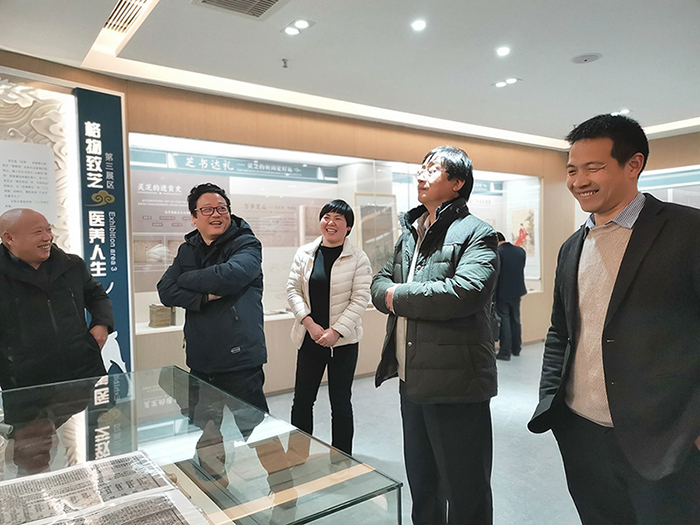
Chairman Bao accompanied the inspection delegation on a tour of JibaiChuan’s Oriental Ganoderma Culture Museum and its transparent production line for Ganoderma spore powder, after which they held an exchange meeting on enhancing bamboo forest productivity and developing a symbiotic economy.
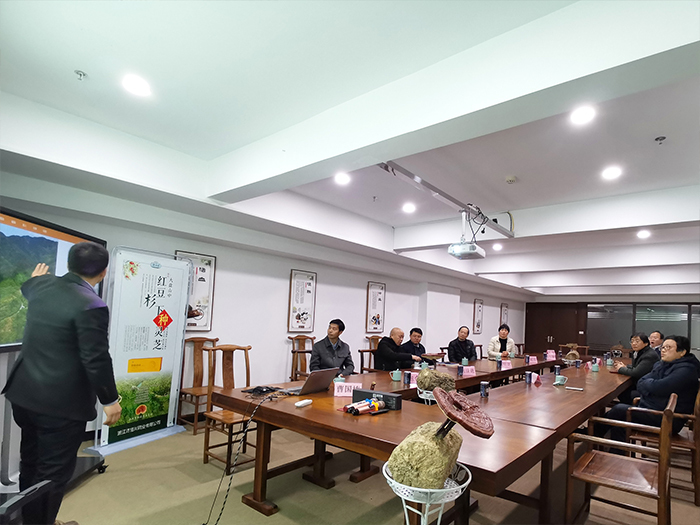
The meeting was held in the conference room of Zhejiang JibaiChuan Pharmaceutical Co., Ltd. Attendees included representatives from the Bamboo Research and Development Center of the National Forestry and Grassland Administration, the Subtropical Forest Research Institute of the Chinese Academy of Forestry, the International Bamboo and Rattan Organisation, Pan’an Shanzhizhou Agricultural Technology Co., Ltd., and Zhejiang Youni Jia Decoration Technology Co., Ltd. As company representatives, Chairman Bao Jiajin of JibaiChuan Pharmaceutical and others participated, jointly exploring how under-forest technologies can be leveraged to enhance productivity.
At the meeting, Chairman Bao showcased to the delegation the JibaiChuan red‑cedar understory Ganoderma cultivation base, providing a detailed overview of the company’s philosophy behind wild‑adaptation cultivation of Ganoderma and its time‑honored traditional processing techniques. He also shared insights into the understorey economy and outlined a vision for developing a full‑chain industrial model that integrates forest‑medicine symbiosis.
In response, the Bamboo Center of the National Forestry and Grassland Administration has recommended digitizing the base and leveraging digital intelligence to advance under-forest technologies, thereby boosting productivity. During the inspection team’s tasting of JibaiChuan’s “dry‑consumption” lingzhi spore powder cultivated beneath yew trees, Researcher Fan Shaohui from the International Bamboo and Rattan Centre and Researcher Chen Shuanglin from the Subtropical Forestry Research Institute of the Chinese Academy of Forestry both expressed high praise for the product’s quality. They each offered specific suggestions on how to further expand production capacity by starting with standardization.
Today, JibaiChuan has established a digital quality‑traceability system. By simply scanning with a smartphone, users can instantly access detailed information—such as the spore powder’s genetic origin, the cultivation site, the rainfall and temperature at the specific mountain where it was grown, and the precise dates of planting, harvesting, and processing—ensuring full end‑to‑end traceability.
Looking ahead, JibaiChuan aims to deepen collaboration and continue advancing the revitalization of the traditional Chinese medicine industry through “digital empowerment and digital reform.” By leveraging quality traceability, it seeks to reinvent the entire production process of medicinal herbs, ensuring that authentic local varieties remain true to their origins, fostering symbiotic relationships between forest and medicinal plants, and promoting shared prosperity between mountains and seas.
Related Recommendations
Making traditional Chinese medicine more effective, making life healthier.
Service Hotline
Company Address
No. 29, Yaoxiang East Road, Xinwo Subdistrict, Pan’an County, Zhejiang Province
Contact email


